
AMD GPUs on the YOM edge network: proof of concept
We ran our edge network on AMD GPUs in a proof of concept. It is not live in production yet. Here is what we tested, what it took, and why a network should not depend on one GPU supplier.

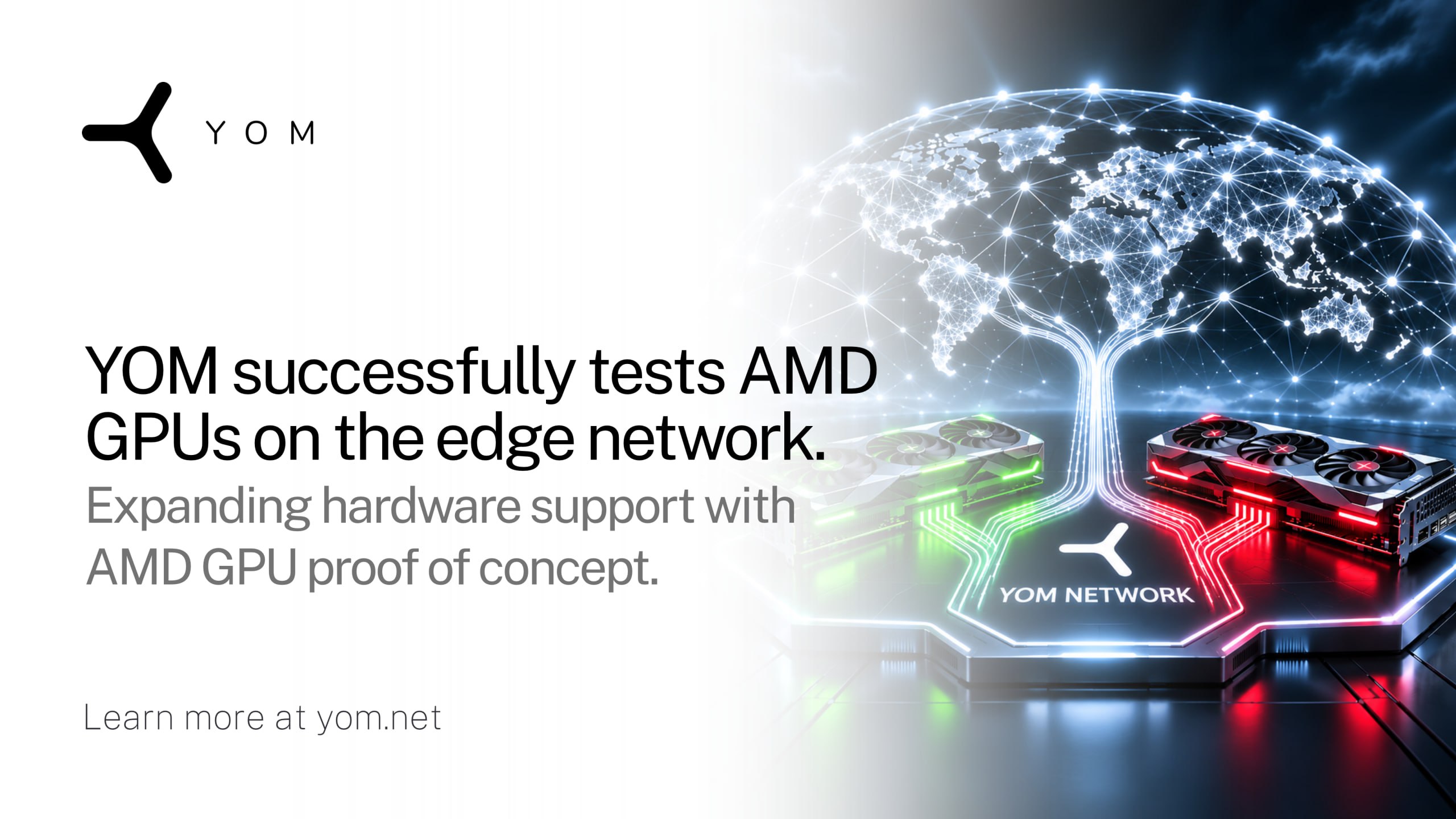
YOM has completed a proof of concept running our edge network on AMD GPUs. NVIDIA GPUs run the network today, they are fully supported, and that does not change. What changes is that a PC or server with an AMD GPU will be able to join the same network.
This post covers what we did, what is not live yet, and why we think any infrastructure network is stronger when it does not depend on a single supplier.
What we’ve done
PCs with AMD GPUs were tested and worked with the NANO. We have also started development on servers for telco tower sites, to go alongside the NANO rollout (what the tower sites add).
What this is not, yet
A proof of concept shows that something works. It is not the same as being live on the network. Today, hosts and players are not yet running on AMD nodes in production. When that changes we will say so here and in our Discord, with what is supported and what isn’t.
What it took
A GPU is not one interchangeable part. Three things differ between vendors for a network like ours:
- Drivers. Each vendor has its own driver stack, and it has to install and update cleanly on a host’s machine.
- Video encoding. Streaming a game means encoding video on the GPU, and the encoder hardware and software are different on each vendor’s cards.
- Container tooling. Every session runs in its own container, and giving a container access to the GPU works differently for each vendor.
We are building this so the node will detect which GPU it has when it starts. Hosts will not pick a vendor or change a setting. NVIDIA nodes will follow the same path they always have.
Why we’re doing it
Real-time work needs a GPU close to the user, so we put GPUs next to users, in homes and on telco towers, instead of in a few large sites. Spreading the load that way also avoids a single point of pressure on a grid, a water supply or a local community.
Hardware supply works the same way. A network that depends on one vendor for every GPU inherits that vendor’s supply, pricing and product decisions. A network that can use more than one has more options on a bad day and more people who can join.
That is the case for AMD support, and it is an engineering case, not a statement about anyone else. We want hosts with the hardware they already own to be able to join, and we want the network to keep running whatever happens in one part of the supply chain.
There is a practical gaming reason too. PlayStation and Xbox both use AMD graphics, so a large share of the games people play are already built and tuned for AMD hardware.
What’s next
We are working on bringing AMD nodes into production, on the telco tower servers, and on live AI sessions alongside games. If you have a PC with an AMD GPU, watch our Discord and this blog: we will announce when AMD nodes can join the network.
NVIDIA and AMD GPUs, same network. More ways to join, fewer single points of failure.
about YOM
YOM runs the GPU session edge: GPUs next to every user, paid per session. Gaming PCs owned by their hosts, and telco racks near users, run game streaming (YOM Games, and Walter at walter.gg for players) and live AI conversations (YOM AI). A Standard session of up to an hour costs $0.08; an hour of play on a reserved data-centre GPU costs $1.23. Median one-way latency, measured live over the last 30 days: 20 ms for players within 50 km of a node, 37.1 ms across all sessions (yom.net/source-of-truth).


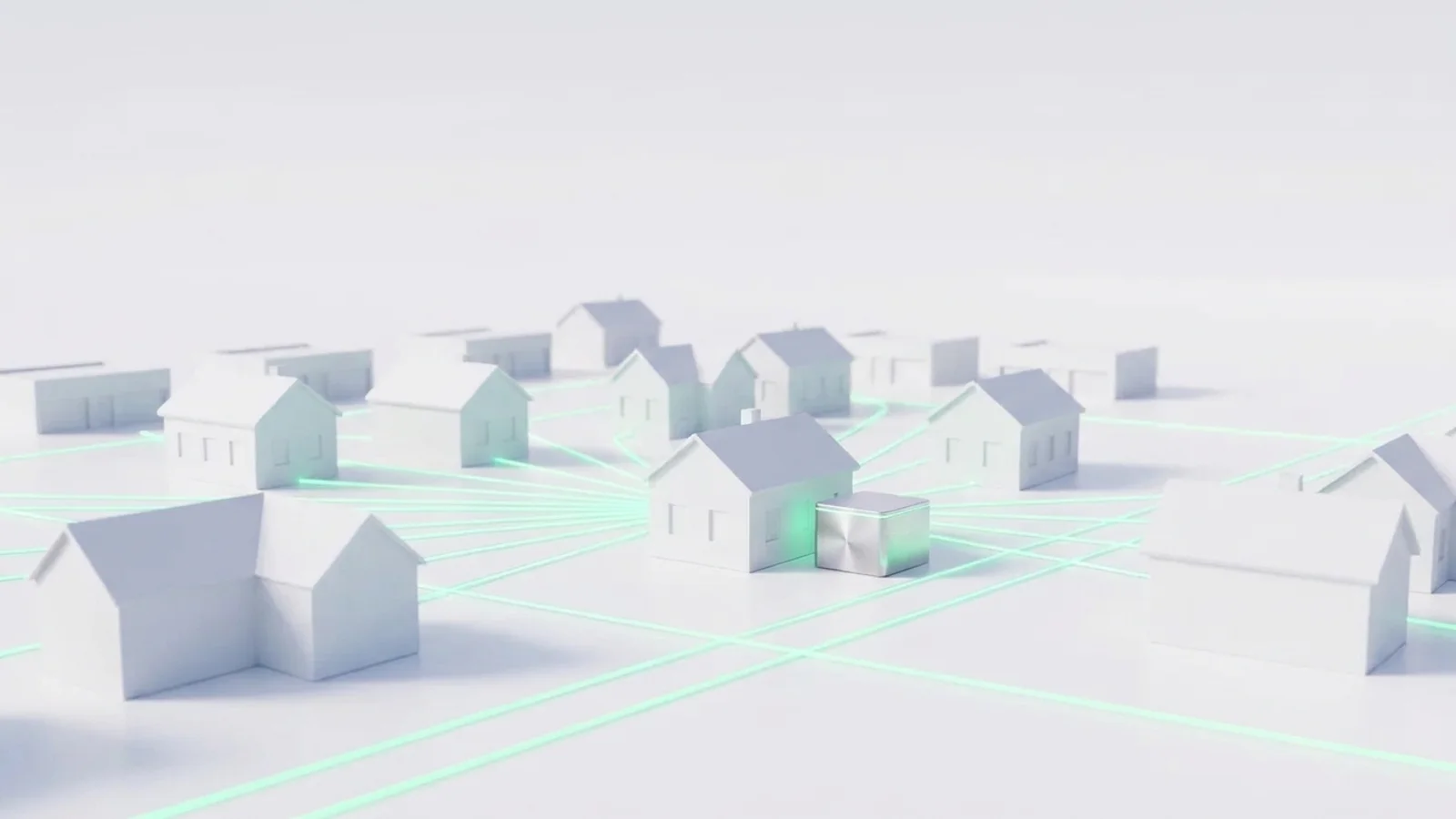

the network under all of this
real-time work has to happen close by
About fifty kilometres from the person waiting for it. The hardware that close to people already exists, and most of it is switched off.