
27,127 sessions and 5 ms ping: inside YOM's busiest month yet
Three months of network data, what happens when real players flood the pipes, and how to verify every number on-chain.

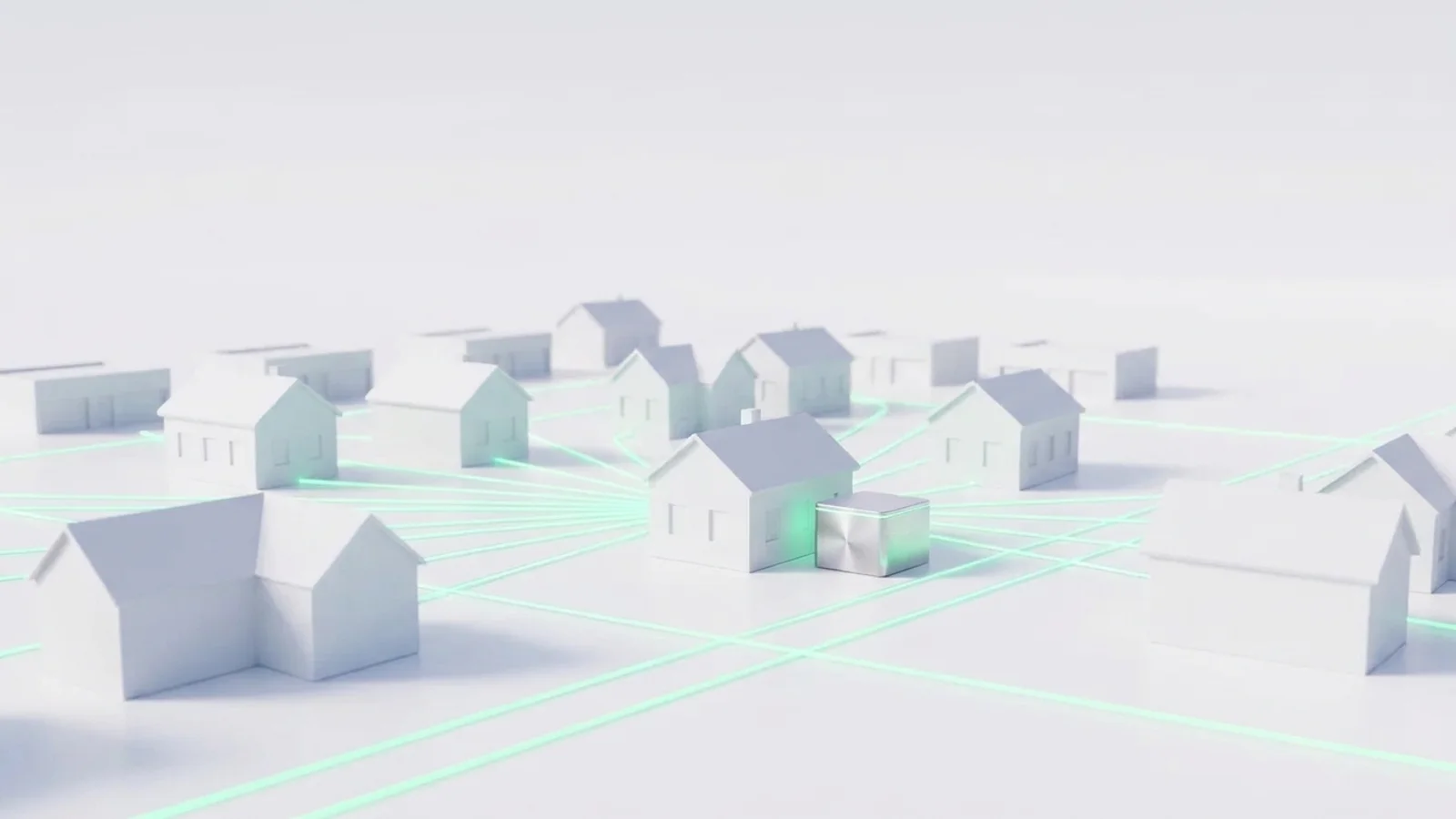
Every game streamed on YOM runs through a simple economic loop. There are no complicated levers to pull. The only thing that scales the system is more people logging in to play. In October, that loop took its first real stress test.
the session spike
Over the last three months, session volume scaled rapidly:
- August: 5,087 sessions
- September: 7,307 sessions (up 44% from August)
- October: 27,127 sessions (up 271% from September)
These are player sessions, counted the same way as app.yom.net/network. Our October update also counted test sessions, which is why its August and September figures are higher.
Most of October’s surge came from Walter, the cloud gaming app built on our network, opening its doors to a wider wave of players. Thousands of people showed up at once, and the decentralized hardware had to carry the load. It held up without a hitch.
burns follow usage
Token burns on YOM are tied directly to network activity:
- August: 667.06 $YOM burned
- September: 1,370.51 $YOM burned
- October: 4,161.97 $YOM burned
- Total burned to date: 6,199.54 $YOM
what node operators earned
Operators are paid per session, and those payouts began in September. Since then, operators have been credited 114,814 $YOM for the sessions they served: 21,233 in September and 93,581 in October. On top of that come the two monthly guaranteed slots per node, set in dollars and paid out in $YOM: $2,826.80 for September and $3,148.58 for October. The number of nodes serving players went from 38 in August to 42 in September and 45 in October.
A NANO is a small drive that turns a gaming PC with an NVIDIA card and a wired connection into a node. The PC’s own GPU then serves players nearby, in normal homes and offices. What an operator makes comes down to three practical factors: hardware specs, uptime, and local player demand. Payouts vary from node to node, and there is no point pretending every machine earns the same flat rate.
Notice that while active nodes grew steadily from 38 to 45, session volume more than quadrupled. Each individual node carried a much heavier workload in October than it did in August.
october under the hood
Players logged 27,127 sessions and 1,762.7 hours of total stream time in October, led by Marvel Rivals, Skyrim, Counter-Strike 2, and Warframe. Two specific sessions show what this architecture looks like in practice:
5 ms latency. A 32-minute Counter-Strike 2 match in Montevideo, hosted by a NANO about 9 km from the player. Competitive shooters punish lag immediately; you feel even minor input delay in your mouse hand and in every gunfight. At 5 ms, the stream feels indistinguishable from a local rig.
8 hours and 17 minutes. The longest continuous session of the month: a marathon Marvel Rivals run by a player in Leeuwarden, powered by a NANO 28 km away. That wasn’t a controlled stress test or a curated demo. This is just someone spending their evening gaming on a community node, with the stream coming from a home, not a data center.
why distance beats raw data center scale
Everything in October’s numbers points back to physics. Real-time workloads break down over long distances not because data center GPUs are slow, but because light takes time to travel through fiber. A top-tier GPU sitting on another continent still delivers a sluggish stream, whereas a solid GPU 9 km down the road feels instantaneous.
That is why we distribute hardware into ordinary neighborhoods instead of building massive, isolated server farms. The exact same local edge routing that makes a Counter-Strike 2 duel feel snappy is what real-time AI inference needs to respond without lag. Same physical bottleneck, different workload.
check the numbers yourself
You don’t have to take our word for any of this:
- Live and historical session metrics follow the exact tracking methodology shown on app.yom.net/network.
- Every operator payout and token burn settles on-chain, open for anyone to audit.
The whole point of building decentralized infrastructure is removing ourselves from the middle of the ledger. These numbers belong to the network, not to our spreadsheets.
where this leaves us
We are building the fastest, most affordable decentralized GPU edge network on the market. October proved the flywheel works in live production: more players drove higher operator payouts and larger token burns.
One strong month doesn’t guarantee a straight line upward, and hardware growth always comes with real-world friction. Still, the underlying mechanics held under pressure, and that is what we set out to prove.
keep reading
related articles


the network under all of this
real-time work has to happen close by
About fifty kilometres from the person waiting for it. The hardware that close to people already exists, and most of it is switched off.