
64 payouts, zero intervention: the night YOM's payouts went automatic
What happened in the first 36 hours after we handed the payout loop over to a contract, and how to verify every transaction yourself.
For most of this network’s life, paying node operators involved a human being. Someone checked what each node had served, worked out what was owed, and sent it. It worked, but it does not scale.
On 11 November, that stopped. Payouts now run on their own.
the first 36 hours
- 64 payouts
- 37 operators paid
- 36,586 $YOM paid out in total
- 518 USDT spent buying that $YOM on the open market
Every payout went through. Every one split exactly as designed. No failures, no stuck transactions.
how a payout runs
A session fee is set in dollars and paid in $YOM, bought on the open market, and the contract splits each payment four ways on fixed shares (the token cycle explains the split). Across the first 36 hours that came to 21,952 $YOM to operators, 10,976 $YOM to network development, 1,829 $YOM into the holders’ share and 1,829 $YOM retired.
Total retired to date now stands at 8,029 $YOM.
the holders’ share is collecting, not paying
The 5% holders’ share is accumulating in a staking pool on-chain. Staking itself is not open yet, so nothing is being distributed from it.
We are mentioning it now rather than later because the pool is already visible on-chain, and someone was always going to find it. When staking does open, we will say so directly and in detail.
what comes next
The monthly bonus contract is cleared to go live, and the first automatic bonus run happens on 1 December. That covers the monthly bonus each NANO carries, which until now has also been processed by hand.
After that, the entire operator payment path runs without us touching it.
check the numbers yourself
Every payout and every retired token settles on Avalanche C-Chain as a transaction of the $YOM token, so anyone can audit them. The token contract is 0xb6314518b61b4864162c7aE7fdc36261e0A14C4b; open it on Snowtrace to follow its transfers, or start from the token page.
We do not need you to trust these figures. The reason for moving payouts into a contract in the first place was to remove the question of trust from the equation. The ledger is the answer, not our word for it.
where this leaves us
Nobody notices payouts until they are late. Since 11 November, they cannot be.
It is the kind of plumbing that decides whether a network of 37 operators can become a network of 3,700. People who run hardware need to know they get paid, on time, in the same proportion, whether or not anyone at YOM is awake.
Jeff Outlaw, COO
about YOM
YOM runs the GPU session edge: GPUs next to every user, paid per session. Gaming PCs owned by their hosts, and telco racks near users, run game streaming (YOM Games, and Walter at walter.gg for players) and live AI conversations (YOM AI). A Standard session of up to an hour costs $0.08; an hour of play on a reserved data-centre GPU costs $1.23. Median one-way latency, measured live over the last 30 days: 20 ms for players within 50 km of a node, 37.1 ms across all sessions (yom.net/source-of-truth).

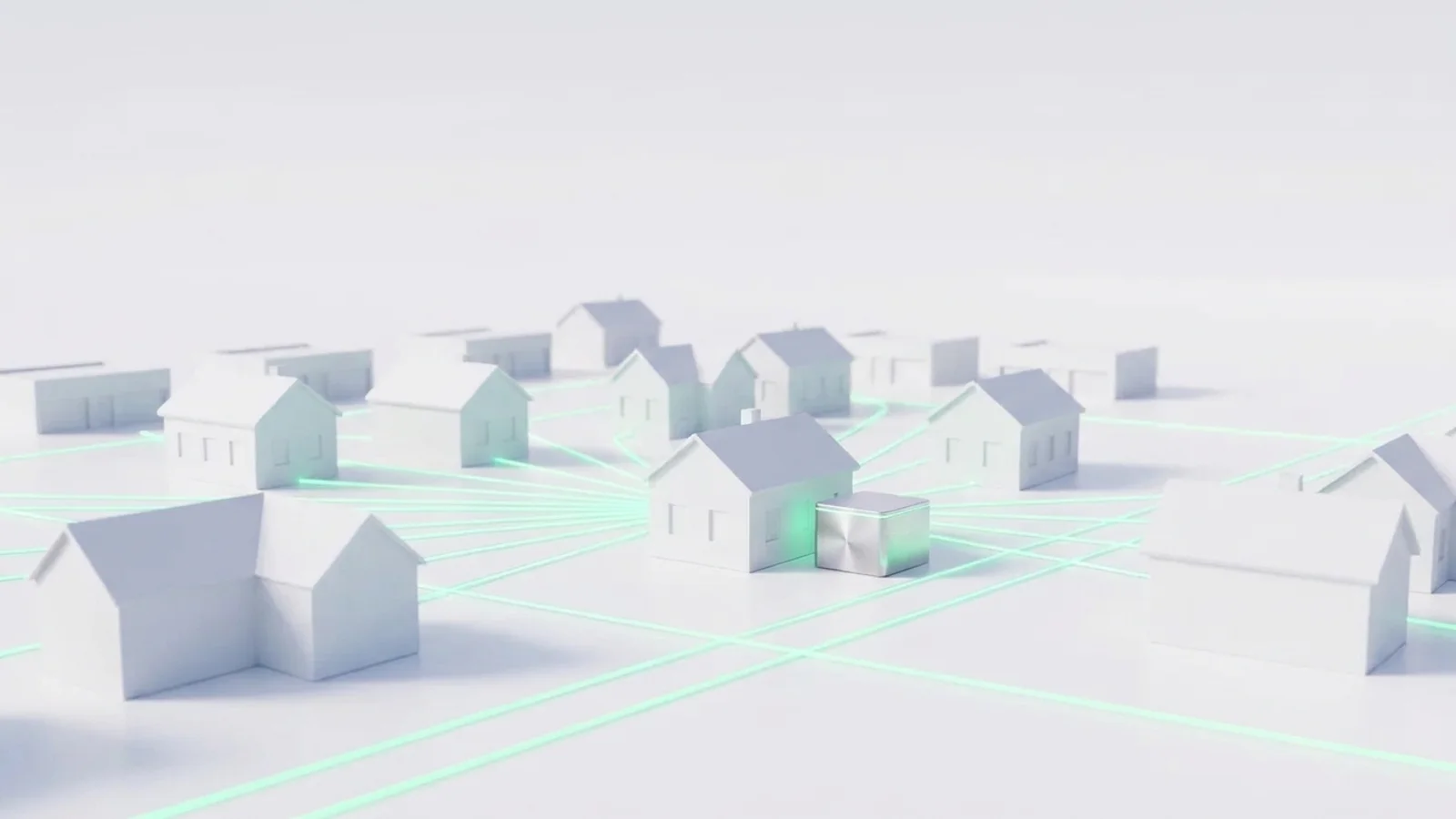


the network under all of this
real-time work has to happen close by
About fifty kilometres from the person waiting for it. The hardware that close to people already exists, and most of it is switched off.